


Q10
From Dark Spots
to Bright Confidence
%201_gui.png)
How Does Q-switched Laser Remove Pigmentation or Tattoos?
Q10 or Q10 PREMIUM uses Q-switched Nd:YAG laser technology, which delivers ultra-short, high-energy pulses that shatter pigment particles in the skin without damaging the surrounding tissue. These tiny pigment fragments are then naturally eliminated by the body’s immune system over time. This process effectively targets conditions like freckles, age spots, melasma, and tattoos of various ink colors.
Flat Top-hat Beam Profile
Both Q10 and Q10 PREMIUM exhibit a flat top-hat beam profile, ensuring uniform and consistent energy delivery to the target area.

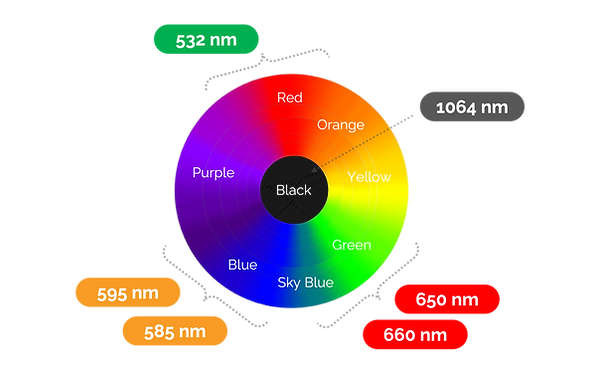
Six Wavelengths
With its diverse array of six distinct wavelengths, Q10 or Q10 PREMIUM is adept at precisely targeting an extensive spectrum of diverse pigments.

Q10
Indications
Epidermal Pigments
Solar lentigo
Freckles
Seborrheic Keratosis
Café-au-lait
Dyschromia
Dermal Pigments
Nevus of Ota
ABNOM
Toning
Melasma
PIH
Tattoo Removal
Black tattoo
Colored tattoo
Rejuvenation
Wrinkles
Enlarged pores
Scars
Q10 PREMIUM
Indications
Epidermal Pigments
Solar lentigo
Freckles
Seborrheic
KeratosisCafé-au-lait
Dyschromia
Dermal Pigments
Nevus of Ota
ABNOM
Toning
Melasma
PIH
Tattoo Removal
Black tattoo
Colored tattoo
Rejuvenation
Wrinkles
Enlarged pores
Scars
Vascular Lesion
Telangiectasia
Blue vascular
Facial flushing
Inflammatory acne
Rosacea
Nevus flammeus
Hemangioma
Spider veins
Hair Removal
Arm I Beard I Chest
Axilla I Groin I Leg I Others

Frequently Asked Questions
Q. What is the difference between Q10 and Q10 PREMIUM?
Q10 and Q10 PREMIUM share the same core laser technology. However, Q10 PREMIUM additionally offers a broader pulse duration range, allowing it to treat additional indications such as vascular lesions and hair removal.
Q. Is the treatment painful?
Most patients experience minimal discomfort—often compared to a mild snapping sensation. There is little to no downtime.
Q. How many sessions are needed for visible results?
Results vary by concern, but most patients notice improvement after 2–3 sessions, with optimal results after a full course of 4–6 treatments, spaced a few weeks apart.
Q. Can I return to my normal activities after the treatment?
Yes. Most patients can return to their daily activities immediately after the procedure. Mild redness may occur but usually subsides within a few hours.
Q. What should I do after the treatment to get the best results?
It is important to protect the treated area from sun exposure and apply sunscreen regularly. Your practitioner may also recommend gentle skincare products and avoiding harsh treatments for a few days.
